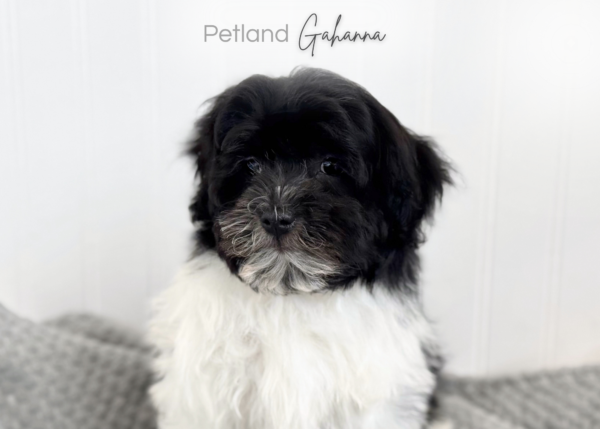

Status
Available
Reference ID
837
Availability
05-27-2026
Birth Date
03-25-2026
Age
16 Weeks
Gender
Male
Color
Black / White
Adult Pet Size
Small
Location
Petland Gahanna

Please fill out the Pet Inquiry form below.
Status
Available
Reference ID
837
Availability
05-27-2026
Birth Date
03-25-2026
Age
16 Weeks
Gender
Male
Color
Black / White
Adult Pet Size
Small
Location
Petland Gahanna
Related Articles
-

Petland
What Comes With A Puppy From Petland?
So, you’re thinking about getting a puppy from Petland? Get ready because you’re not just taking home a bundle of furry joy. You’re also getting a full-on star...
-

Petland
Puppy Play Dates: Making New Furry Friends The Fun & Safe Way
Bringing home a new puppy is like adding a little tornado of energy to your life. They zoom around, chew on everything, and look at you with those big, eager eyes that say, R...
-

Petland
The 5 Best Dog Breeds for Families: Your Perfect Furry Companion Awaits!
Bringing a dog into your family is a big decision that comes with lots of joy, responsibility, and, of course, plenty of tail wags. With so many breeds to choose from, finding t...
-

Petland
Your Paw-some New Puppy Checklist: Everything You Need for Your Furry Friend!
Bringing home a new puppy? Get ready for cuteness overload, lots of tail wags, and… a bit of chaos too. Puppies are like tiny, adorable tornadoes that can turn your world ...
-

Petland
2025 Doggy Self-Care Schedule
Self-care is all about wagging your tail and feeling pawsitively great! It involves activities that keep you happy, healthy, and full of energy. Whether it’s a daily walk,...
-
Petland
Training Your New Puppy: A Fun Adventure with Tail-Wagging Results!
Bringing a puppy into your life is like welcoming a furry little tornado of joy, energy, and endless cuteness. But let’s be real—along with the cuddles and wagging t...
-

Petland
Protect Your Feline Friend: What Every Cat Owner Needs to Know About Avian Influenza!
As a cat owner, ensuring the health and safety of your furry friend is a top priority. With the emergence of avian influenza, commonly known as bird flu, it’s crucial to u...
-

Petland
How to Ensure Your Pet Has a Merry and Safe Christmas: A Guide to Pet Safety, Toys, and Nutrition
Ah, Christmas! The time of year when homes are aglow with twinkling lights, the air is filled with the scent of pine, and everyone is wrapped in a warm, fuzzy feeling of joy and...
-

Petland
The Ultimate Puppy Playbook: Everything You Need to Know About Raising Your New Best Friend
There’s nothing like the joy of bringing a fluffy, four-legged bundle of joy into your life. Puppies are the ultimate companions—full of love, energy, and just a lit...
-

Petland
Gobble ‘Til You Wobble: A Pet Lover’s Guide to Thanksgiving Bliss
1. Thanksgiving: The Feast of Gratitude and Gravy Thanksgiving is the time to shine brighter than a disco ball in the holiday hall of fame. It’s when families roll in like...